
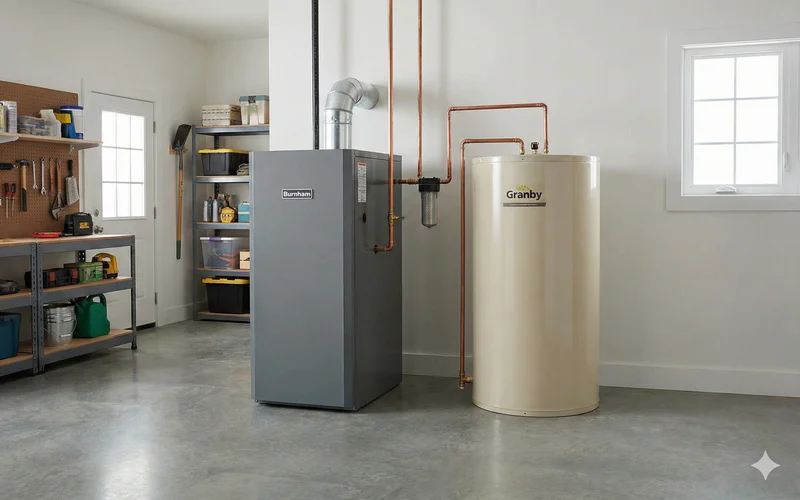
In the shifting energy landscape of 2026, understanding exactly what you are putting into your heating system is more critical than ever. Whether you are a homeowner in a rural region of Canada, a plant manager in the UAE, or a property developer in New Jersey, the term furnace oil often pops up as a reliable, high-energy-density fuel. However, the terminology can be confusing. Is it the same as the red-dyed diesel in your tractor? Is it Bunker fuel? Or is it simply heating oil?
Choosing the right fuel—and understanding the mechanics behind it—can save you thousands in maintenance and operational costs. If you are currently in the process of buying furnaces or visiting an HVAC Center to upgrade your infrastructure, this deep dive is designed to be your definitive resource. We will explore the technical specifications, the mechanical processes of combustion, and the environmental trajectory of furnace oil in 2026.
Defining Furnace Oil: Technical Characteristics and Origin
At its most technical level, Furnace Oil (FO) is a dark, viscous residual fuel obtained from the crude oil distillation process. While “light” fractions of crude oil become gasoline or jet fuel, the heavier “bottom of the barrel” fractions are refined into furnace oil.
Viscosity: The Heart of FO Specifications

Viscosity is the single most important characteristic when discussing furnace oil. It measures the fluid’s resistance to flow, which directly influences how much pre-heating is required for storage, pumping, and satisfactory atomization in a burner.
- 180 $cSt$ Grade: This is a bunker fuel with a maximum viscosity of 180 Centistokes. It is “thinner” and easier to handle in moderately cold environments.
- 380 $cSt$ Grade: This is a “thicker,” more viscous bunker fuel. It is highly efficient for large-scale industrial boilers but requires significant pre-heating to flow through lines without clogging.
Flash Point and Pour Point
Beyond viscosity, engineers look at the Flash Point (the lowest temperature at which vapors will ignite) to ensure safety during transport. In 2026, strict maritime and industrial regulations require a high flash point to prevent accidental explosions in storage tanks. The Pour Point is equally vital; it is the temperature below which the oil becomes plastic and ceases to flow. For those living in cold climates like Ontario or the Northern US, understanding the pour point is the difference between a warm home and a frozen fuel line.
Furnace Oil vs. Heating Oil vs. Diesel: Clearing the Confusion
One of the primary reasons people end up at an HVAC Center frustrated is a misunderstanding of nomenclature. Depending on where you live, these terms may be used interchangeably, but technically, they differ.
- Heating Oil (Residential): Often called “No. 2 Fuel Oil.” In terms of chemical composition, it is very similar to diesel fuel. In the US and Canada, it is dyed red to indicate that it is for off-road/heating use only.
- Furnace Oil (Industrial): In international trade (UAE, Oman, India), “Furnace Oil” usually refers to the heavier, more viscous residual fuel (Bunker C or No. 6 Fuel Oil) used in ships and massive industrial plants.
- Diesel: While you can run an oil furnace on standard automotive diesel in an emergency, it is much more expensive because of the tax. Additionally, diesel lacks some of the lubricating additives found in modern Bioheat or premium heating oils that protect your furnace’s fuel pump.
A Comparison of Fuel Properties
| Feature | Heating Oil (No. 2) | Furnace Oil (No. 6 / FO) | Diesel |
|---|---|---|---|
| Viscosity | Low (Flows easily) | High (Requires heating) | Low |
| Energy Density | ~138,500 BTU/gal | ~150,000+ BTU/gal | ~137,000 BTU/gal |
| Primary Use | Residential Homes | Industrial / Maritime | Transportation |
| Cost (2026) | Moderate | Low (Residual) | High (Taxed) |
How Does an Oil Furnace Work? From Tank to Vent
To appreciate why furnace oil is such an effective fuel, we need to understand the mechanical journey it takes from your storage tank to the heat registers. Before diving into the specifics of oil, it is important to understand the broader context of what is a gas furnace and how combustion differs between fuel types. Modern oil furnaces are far more sophisticated than the “smoke-belchers” of the 1970s.
Step 1: Fuel Delivery and Filtration
The process begins at your storage tank. A fuel pump draws the oil through a primary filter. In 2026, high-efficiency systems often use a two-stage filtration process to ensure that even microscopic particulates are removed. This is crucial because the nozzle that sprays the oil into the combustion chamber is incredibly precise.
Step 2: Atomization

This is the most critical mechanical step. Oil does not burn well in its liquid state. To create a clean, hot fire, the oil must be “atomized”—turned into a fine mist. The fuel pump pushes the oil through a brass nozzle at high pressure (often 100 to 140 PSI), breaking the liquid into millions of tiny droplets.
Step 3: Ignition and Combustion
As the mist enters the combustion chamber, an electric transformer creates a high-voltage spark. The mist ignites, creating a powerful, consistent flame. If you notice a furnace yellow flame, it is a sign of incomplete combustion, often caused by a dirty nozzle or an improper air-to-fuel ratio. A blower fan then pushes air from your home over the outside of the heat exchanger.
Step 4: Heat Exchange and Exhaust
The heat exchanger is a sealed metal chamber. The fire inside heats the metal, and the house air picks up that heat as it passes over the surface. The toxic combustion gases are kept entirely separate from your home’s air and are vented out through a chimney or a direct-vent pipe.
The Global Landscape: Industrial Applications of Furnace Oil (FO)
While many associate furnace oil with home heating, its largest footprint is in the industrial sector, particularly in growing economies like the UAE and Oman, as well as heavy industrial zones in Canada.
Steam Boilers and Power Plants

In large-scale manufacturing, furnace oil is the primary fuel for steam boilers. These boilers generate the high-pressure steam required for everything from food processing to textile manufacturing. Because FO is a residual fuel, it is often significantly cheaper for industrial giants to buy in bulk compared to natural gas, especially in regions where gas infrastructure is limited.
Maritime and Bunker Fuel
The shipping industry is the backbone of global trade. “Bunker Oil” is essentially a grade of furnace oil. In 2026, the maritime industry has shifted toward Low Sulfur Fuel Oil (LSFO) to comply with international environmental standards, but the core “viscous residual” nature of the fuel remains the same.
Pros and Cons of Oil Heating Systems in 2026
As you consider buying furnaces, you must weigh the historical reliability of oil against modern alternatives like natural gas or electric heat pumps.
The Pros:
- Energy Density: Oil contains more BTUs per unit of volume than natural gas. This means an oil furnace can heat a home or a boiler much faster.
- Safety: Furnace oil is not explosive. It requires atomization and a high-voltage spark to ignite, making it safer than gas in the event of a leak.
- Independence: With an oil tank on your property, you are not dependent on a municipal grid.
- Longevity: Oil furnaces are built “heavy-duty.” Homeowners often wonder, “can a furnace last 50 years?” While 30 years is more common, their durability is legendary.
The Cons:
- Maintenance Requirements: Because oil is a “dirty” fuel compared to gas, it leaves behind soot and ash. Annual cleanings are non-negotiable.
- On-Site Storage: You must have a tank on your property. Old tanks can rust and leak, leading to environmental liabilities.
- Complexity: If you are asking “is a furnace gas or electric?”, you might find oil to be the most maintenance-heavy of the three.
Oil Furnace vs. Gas Furnace: A Detailed Comparison
If you are at an HVAC Center trying to decide between these two, the decision usually comes down to infrastructure and long-term ROI. When comparing an 80 vs 90 furnace, efficiency becomes the main talking point.
| Comparison Factor | Oil Furnace | Gas Furnace |
|---|---|---|
| Initial Cost | Higher (Requires tank) | Lower (If gas line exists) |
| Efficiency (AFUE) | 80% - 90% | 80% - 98.5% |
| Operational Sound | Generally louder | quietest gas furnace options available |
| Fuel Availability | Excellent (Delivered anywhere) | Limited (Depends on municipal lines) |
Direct Peer Advice: If your home already has a gas line, the lower maintenance and higher efficiency of gas usually win out. However, if you are in a rural area, upgrading to a high-efficiency model is the smarter move.
Critical Maintenance: Keeping Your Oil System Efficient
A neglected oil furnace is a money pit. In 2026, homeowners are using “smart” oil monitors, but the physical maintenance remains unchanged. If your furnace not kicking on for heat, it could be a simple filter clog or a more complex sensor issue.
Annual Servicing: The “Deep Clean”
Every year, a technician should perform a full cleaning. A layer of soot just 1/16th of an inch thick can reduce the efficiency of your furnace by 10%. If your furnace keeps short cycling or if the furnace keeps cycling on and off, it might be due to a heat exchanger that is “choking” on soot.
Filter and Nozzle Replacements

The fuel filter should be replaced at the start of every season. Similarly, the burner nozzle is a “wear item.” A distorted spray pattern leads to incomplete combustion and more soot. This is a common reason why a furnace quit running mid-winter.
Environmental Impact and the Rise of Bioheat
The biggest conversation in 2026 surrounding furnace oil is its environmental footprint. To meet carbon-reduction goals, the industry has pivoted toward Bioheat.
What is Bioheat?

Bioheat is a blend of traditional ultra-low sulfur heating oil and renewable biodiesel.
- $B5$ Blend: 5% biodiesel, 95% oil.
- $B20$ Blend: 20% biodiesel, 80% oil.
Modern furnaces are now being manufactured to handle higher blends (up to $B100$). This allows homeowners to keep their reliable oil infrastructure while reducing their carbon footprint. If you are comparing this to electrical options, you might ask “is a furnace electric or oil-based?” to decide which “green” path to take. Knowing what is an electric furnace can help you weigh the pros of Bioheat vs. electrification.
Practical Takeaways for Homeowners and Industry
If you manage an oil-based system in 2026, keep these tips in mind:
- Check Your Tank Age: If your oil tank is over 20 years old, check your furnace year by serial number to see if the entire system is nearing its end.
- Encapsulated Units: For systems like a furnace under house crawlspace installation, moisture control is vital to prevent oil tank corrosion.
- Error Awareness: Familiarize yourself with Keeprite Furnace Error Codes or York Furnace Error Codes if you have a hybrid system.
Frequently Asked Questions About Furnace Oil
Why is my furnace oil consumption so high?
This is usually due to a dirty heat exchanger or an oversized nozzle. If the furnace kicks on then shuts off, it wastes significant fuel during the startup phase.
What should I do if my furnace lights then shuts off?
If your furnace lights then shuts off, it might be a dirty nozzle or a failing sensor. If it’s a York unit, check the york furnace flame sensor for carbon buildup.
Can I use diesel in my oil furnace?
Yes, in an emergency. Heating oil and diesel are virtually identical. However, you should avoid using it long-term. If your furnace won’t light with diesel, the fuel might be too “clean” for an old pump.
Why do I see 3 blinks on furnace?
Seeing 3 blinks on furnace often points to a pressure switch or venting issue. For high-efficiency oil systems, this could be a blocked flue.
Does my system need a Furnace Zone Valve Replacement?
If your hydronic oil system is heating unevenly, you might need a Furnace Zone Valve Replacement to restore proper distribution.
How do I handle furnace error codes?
If you see furnace error codes, refer to your manual. If the system hits a furnace 1 hour lockout, it has failed to ignite multiple times for safety.
Conclusion
Furnace oil remains a pillar of the global heating sector in 2026. While it requires more hands-on management than other systems, its heating power and the move toward sustainable Bioheat blends keep it relevant. Success with furnace oil depends on proactive maintenance. Don’t let your system become a relic of the past; with modern filters and renewable blends, oil heating is ready for the future.