
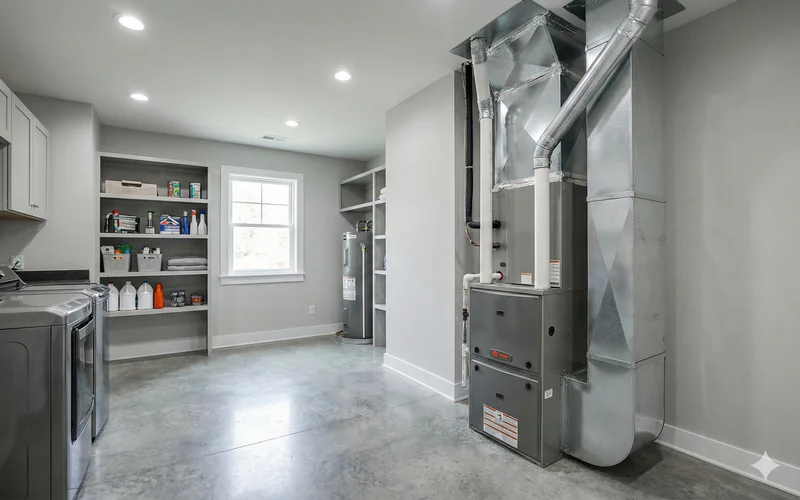
It is January 2026, and as the winter wind howls against your windows, the only thing keeping your sanctuary habitable is the steady, rhythmic hum of your heating system. If you are currently in the process of buying furnaces or visiting a local Hvac center to plan a home upgrade, you have likely realized that while the basic concept of burning gas for heat is old, the modern gas furnace is a marvel of high-tech engineering. Understanding what is a gas furnace and how it optimizes every molecule of fuel is essential for any homeowner looking to balance comfort with the ever-rising costs of energy. Before making a final decision, many ask is a furnace gas or electric to determine which utility setup fits their home best.
In this comprehensive guide, we will peel back the sheet metal and explore the chemistry, physics, and mechanical systems that define the modern gas furnace. From the thermodynamics of heat exchangers to the sophisticated logic of modulating gas valves, we will cover everything you need to know about the heart of your home’s climate control system. Whether you are dealing with a sudden furnace quit running emergency or just performing routine research, this is your definitive resource.
What is a Gas Furnace? An Architectural and Mechanical Definition

At its most fundamental level, a gas furnace is a central heating appliance that utilizes natural gas or propane as a fuel source to generate thermal energy. It is a “forced-air” system, a term that distinguishes it from boilers (which move water) or radiant systems (which use electricity or water in floors). In a forced-air setup, the furnace acts as a centralized air processor. It takes cool air from your living spaces, heats it through a process of combustion, and then uses a powerful blower motor to “force” that warmed air back through a network of galvanized steel or flexible ducts. If you are comparing technologies, you might also want to research what is an electric furnace to see how resistance heating differs from combustion.
In the context of a 2026 home, the gas furnace is far more than just a “heater.” It is a sophisticated air handler that often works in tandem with air conditioners, humidifiers, and high-tech filtration systems. While people often ask is a furnace electric or gas when inspecting their utility rooms, the physical presence of a furnace under house crawlspace or basement usually indicates a complex duct-based system. A space heater or a fireplace provides localized heat, whereas a furnace is designed to maintain a consistent, regulated temperature across every square foot of a residential or commercial structure.
The Evolution of Natural Gas Heating
For much of the 20th century, furnaces were “natural draft” machines. They were inefficient, often losing up to 40% of their heat through the chimney. However, as we have moved into 2026, the push for energy efficiency has transformed the gas furnace. Today’s units are categorized by their AFUE (Annual Fuel Utilization Efficiency) ratings. When comparing an 80 vs 90 furnace, the modern high-efficiency models reach as high as 98.5%. This evolution means that modern units are not just better at making heat; they are better at managing it. Today’s market even offers the quietest gas furnace models that run almost silently in the background.
How Does a Gas Furnace Work? The Scientific Sequence of Operation
To truly understand a gas furnace, you must look at its “Sequence of Operation.” This is the logical chain of events that occurs every time your home needs warmth. Modern furnaces are governed by an Integrated Furnace Control (IFC) board, which acts as the computer brain. If your furnace not kicking on for heat, the breakdown in this sequence is usually the cause.

- The Call for Heat: Everything begins at the thermostat. When sensors detect a temperature drop, a signal is sent to the furnace.
- Pre-Purge and the Inducer Motor: The board activates the Draft Inducer Motor. If this fails, you may see 3 blinks on furnace diagnostics, often indicating a pressure switch error.
- The Ignition Phase: Most modern units use a Hot Surface Ignitor. If the furnace won’t light, this component is often cracked.
- Flame Proofing: The furnace must “prove” that a flame exists using a flame sensor. If the furnace lights then shuts off within seconds, a dirty york furnace flame sensor (for York owners) or a generic sensor is likely to blame.
- Heat Exchange: The flames shoot into the Heat Exchanger, a series of hollow metal tubes.
- The Blower Cycle: The main blower motor turns on, pushing air over the hot tubes and into your home.
The Chemistry of Gas Furnace Combustion

The power of a gas furnace comes from a simple chemical reaction. Natural gas is primarily methane ($CH_4$). When mixed with oxygen ($O_2$) and ignited, it undergoes a combustion reaction. The formula for complete combustion is:
$$CH_4 + 2O_2 \rightarrow CO_2 + 2H_2O + \text{Heat}$$
In this ideal scenario, the only byproducts are carbon dioxide and water vapor. However, incomplete combustion occurs if there isn’t enough oxygen, which results in the production of Carbon Monoxide (CO). If you notice a furnace yellow flame, it is a visual warning of this dangerous chemical imbalance.
Key Parts of a Gas Furnace: A Detailed Component Analysis
To appreciate a gas furnace, one must understand the individual components that allow it to operate for decades.
The Heat Exchanger: Usually made of aluminized steel or stainless steel.
The Blower Motor: Modern units use ECM (Variable-Speed) motors. If the furnace kicks on then shuts off immediately after the fan starts, it might be an electrical issue.
The Gas Valve: A precision solenoid that regulates gas flow.
The Limit Switch: A thermal safety sensor. If the furnace keeps short cycling or if the furnace keeps cycling on and off rapidly, it is often this switch protecting the unit from overheating.
Types of Gas Furnaces: 80% vs. 90% and Beyond

When looking at options in an HVAC center, you will see two primary categories:
Standard-Efficiency (80% AFUE): These are non-condensing and vent through metal chimneys.
High-Efficiency Condensing (90% to 98% AFUE): These recover latent heat from the exhaust, venting through PVC. If you own a high-efficiency unit and experience issues, check for brand-specific Keeprite Furnace Error Codes or York Furnace Error Codes. Modern installations also allow for a furnace zone system where a furnace zone damper regulates heat to specific rooms.
Benefits of a Gas Furnace in 2026
Despite the push for heat pumps, the gas furnace remains incredibly popular for several reasons. It provides unmatched heating power, delivering air at $50^\circ C$ to $60^\circ C$. It offers reliable performance in extreme cold, whereas heat pumps lose efficiency. Homeowners often ask, “can a furnace last 50 years?” and while 20 is more common, their rugged design is built for the long haul.
How to Choose the Right Natural Gas Furnace for Your Home

If you are currently buying furnaces, you shouldn’t just pick the biggest one.
- The Manual J Calculation: Ensuring proper sizing prevents the furnace keeps short cycling problem.
- Understanding AFUE: Choosing between 80% and 97% based on your climate and budget.
- Checking the Age: Always use the furnace year by serial number to verify the manufacture date and warranty status of any unit you are inspecting.
Maintenance and Troubleshooting: Keeping the Fire Burning
A gas furnace is a powerful machine that requires regular care. Neglect is the leading cause of emergency breakdowns.
DIY Maintenance: The single most important task is changing the air filter. A dirty filter causes overheating.
Professional Maintenance: Once a year, a technician should clean the burners and check for furnace error codes. If the system has failed to ignite three times, it will enter a furnace 1 hour lockout.
Safety First: Carbon Monoxide and Gas Leak Prevention
Because a gas furnace involves fire, safety is critical. Carbon Monoxide (CO) is a colorless gas produced by incomplete combustion. For those in rural areas, understanding what is furnace oil vs gas safety is also important. If your system involves water-based heat, you might eventually need a Furnace Zone Valve Replacement to ensure safe operation.
Natural Gas Furnace FAQs
How often should you replace a natural gas furnace?
With proper maintenance, a natural gas furnace should last between 15 and 25 years. If your unit is over 20 years old, it is often more cost-effective to replace it with a high-efficiency model.
What is the average cost of a new natural gas furnace?
In 2026, the cost of a new furnace—including professional installation—typically ranges from $4,500 to $9,000.
Will a furnace run without gas?
No. While the fans might spin and the ignitor might glow, the IFC board will quickly detect the lack of a flame and enter a “lockout” mode to protect the system.
How much natural gas does a 1500 sq ft house use?
Consumption depends on insulation. On average, a 1,500 sq ft home in a cold climate might use between 500 and 900 therms of gas per year for heating.
Can I install a natural gas furnace myself?
Absolutely not. Installing a gas appliance requires a professional license. Working with gas lines and toxic exhaust venting is dangerous and will void the manufacturer’s warranty.
Summary: The Reliability of the Modern Gas Furnace
Understanding your home’s heating system is the first step toward a comfortable and safe winter. The gas furnace remains a pillar of residential life in 2026 because of its sheer power, reliability, and increasingly high efficiency. By choosing a unit with the right AFUE rating, ensuring a professional Manual J calculation is performed, and committing to an annual maintenance schedule, you can ensure that the “blue flame” in your basement provides peace of mind for decades to come. Whether you are looking at a Bryant Evolution series with its advanced diagnostics or a Lennox Signature series for its whisper-quiet operation, the goal is the same: consistent, reliable warmth when you need it most. Don’t let your furnace be a mystery; treat it as the high-tech heart of your home that it truly is.